
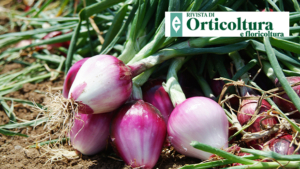
The Calabrian PGI, also called “Red Gold of Calabria”, has managed to establish itself over the years in the area where it is produced
Introduction and historical notes
The history of the “Red Onion of Tropea Calabria PGI” ( Allium cepa L.) is intertwined with the Mediterranean vocation of the Calabrian coast: it seems that the onion was introduced by the Phoenicians to the Vibo Valentia area and, thanks to the important trade routes of the time, it then spread to the Tyrrhenian coastal area of Calabria . As a sign of the importance of the Tropea onion, this local variety is generically referred to as the “Red Gold of Calabria”, as it is recognizable for its sweetness, juiciness, and color .
Historical aspects and protection of the PGI trademark
The link with the area of origin was consolidated in 2008, when the name Cipolla Rossa di Tropea Calabria was registered in the European register as a Protected Geographical Indication (PGI) pursuant to EEC Regulation 2081/92, with EC Regulation no. 284/2008 .
The PGI is not just a trademark, but also a guarantee of the product's distinctiveness: it protects the name and strongly ties the bulb to its territory of origin . In this regard, the connection to the land is also represented graphically by the trademark, which symbolizes the Tropea cliff on which the Benedictine Sanctuary of Santa Maria dell'Isola stands .
The quality of the Tropea Red Onion in Calabria stems from the interaction of soil, climate, culture, and social factors, elements protected by the production regulations . The quality mark was created both to protect and enhance the product and as an opportunity for the economic development of rural areas, preventing its abandonment .
[…]
Source: Journal of Horticulture and Floriculture