
The Rainforest Alliance certification requirements are changing for supply chain companies classified as Level A, which have so far been exempt from independent audits because they are considered low-risk.
To comply with the requirements of Directive (EU) 2024/825 on Empowering Consumers for the Green Transition (EmpCo), Rainforest Alliance has introduced a new verification system requiring the mandatory involvement of an authorized certification body, including for these organizations.
By December 31, 2027, previously endorsed Level A companies will be required to undergo a remote audit conducted by an independent certification body to obtain a certificate valid for three years.
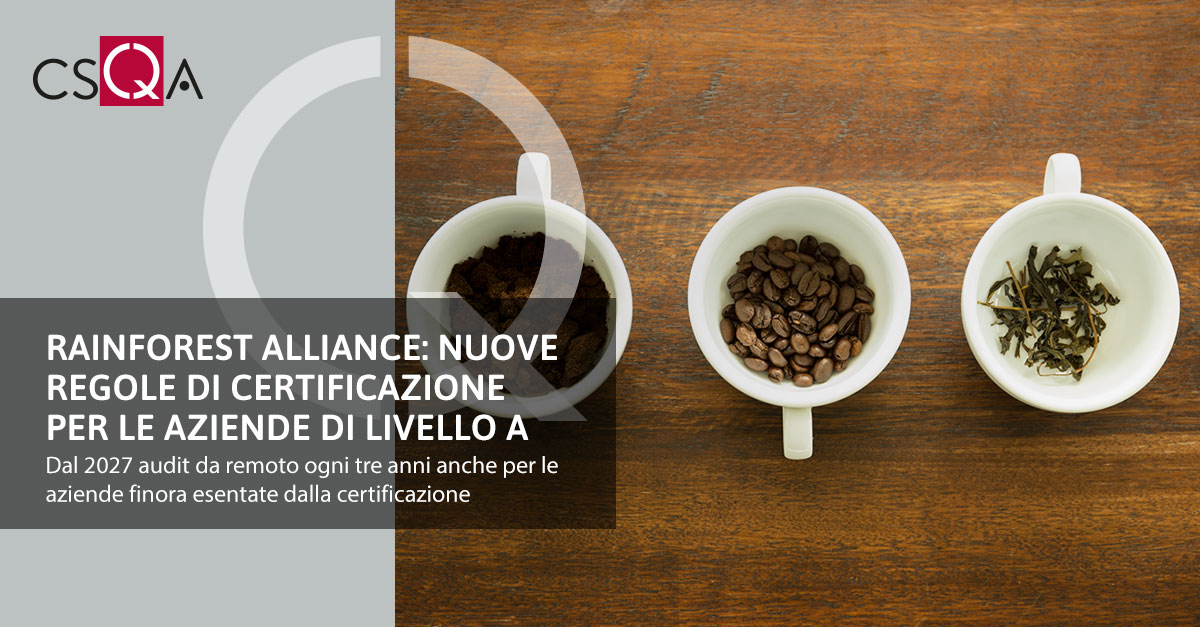
The changes affect companies operating in Rainforest Alliance supply chains, including those involving coffee, cocoa, tea and other certified agricultural commodities.
What changes for Rainforest Alliance Level A companies
The Rainforest Alliance certification system provides for a risk-based classification of supply chain organizations, determined through the Supply Chain Risk Assessment (SCRA).
Companies classified as Level A, considered low-risk, have so far benefited from a simplified procedure without the obligation to undergo an independent audit. Their compliance was recognized through an Endorsement Letter issued directly by Rainforest Alliance.
The new Policy on Third-Party Verification Requirements for Certificate Holders with Level A Sites changes this system.
The main changes include:
-
Mandatory independent audit: Level A companies will also be required to undergo verification by a Rainforest Alliance-authorized certification body.
-
Remote verification: audits may be conducted remotely through the review of company documentation and records.
-
Three-year certificate: following a successful audit, the certification body will issue a certificate valid for three years, replacing the previous Endorsement Letter.
-
Renewal every three years: companies will be required to undergo periodic verification to maintain their certification.
-
Annual internal inspections: companies will be required to conduct an Internal Inspection every year using the Rainforest Alliance checklist and comply with all applicable requirements.
The procedure has been designed to maintain a level of verification proportionate to the risk associated with the organizations concerned.
Neither the risk classification criteria nor the requirements of the Rainforest Alliance standard are changing: what changes is the way companies' compliance is verified and formally confirmed.
Deadlines for compliance
The new policy introduces different deadlines depending on the company's circumstances.
For Level A organizations that already hold an Endorsement Letter, the deadline for completing the first independent audit is December 31, 2027. From that date onwards, previously issued Endorsement Letters will no longer be valid.
For new Level A organizations that did not submit their self-assessment by October 30, 2026, the audit must be completed within three months of the first certified purchase.
Specific provisions also apply to multi-site certifications covering sites classified under different risk levels.
Companies concerned should therefore contact an authorized certification body well in advance to schedule their audit and ensure the continuity of their Rainforest Alliance certification.
Why the rules are changing: the European EmpCo Directive
The new provisions are part of the process of aligning with Directive (EU) 2024/825, known as the Empowering Consumers for the Green Transition Directive (EmpCo), which strengthens consumer protection against misleading commercial practices and greenwashing.
The European legislation introduces stricter requirements for the use of sustainability labels, which must be based on certification schemes involving independent third-party verification or be established by public authorities.
The objective is to ensure that environmental and sustainability claims are supported by reliable, transparent and verifiable information.
For Rainforest Alliance, introducing independent audits for Level A companies is therefore an important step towards strengthening the credibility of its certification system and ensuring compliance with the new European requirements.
The new Rainforest Alliance provisions apply to all organizations concerned worldwide, not only those operating within the European Union.
What companies need to do
To prepare for the new certification system, companies operating in Rainforest Alliance supply chains should:
-
Check their risk classification and determine whether the new requirements apply to them.
-
Contact a Rainforest Alliance-authorized certification body.
-
Schedule the remote audit within the applicable deadlines.
-
Prepare the necessary documentation to demonstrate compliance with the applicable requirements of the standard.
-
Obtain the new three-year certificate and plan subsequent renewal audits.
Proper planning will enable companies to manage the transition to the new system without jeopardizing the continuity of their certification or the commercial activities associated with Rainforest Alliance supply chains.
CSQA: Rainforest Alliance audits and certification
CSQA is a Rainforest Alliance-authorized certification body and can support companies in complying with the new requirements for Level A organizations.
Companies that have so far benefited from the exemption from independent audits can contact CSQA to schedule their remote audit and obtain the new certificate valid for three years.
Drawing on its extensive experience in agri-food supply chain and sustainability certification, CSQA provides organizations with specialized expertise in verifying compliance with Rainforest Alliance requirements.
Interested companies can contact CSQA for further information and to schedule their audit within the applicable deadlines, ensuring certification continuity and compliance with the new provisions of the Rainforest Alliance certification program.