

What is it?
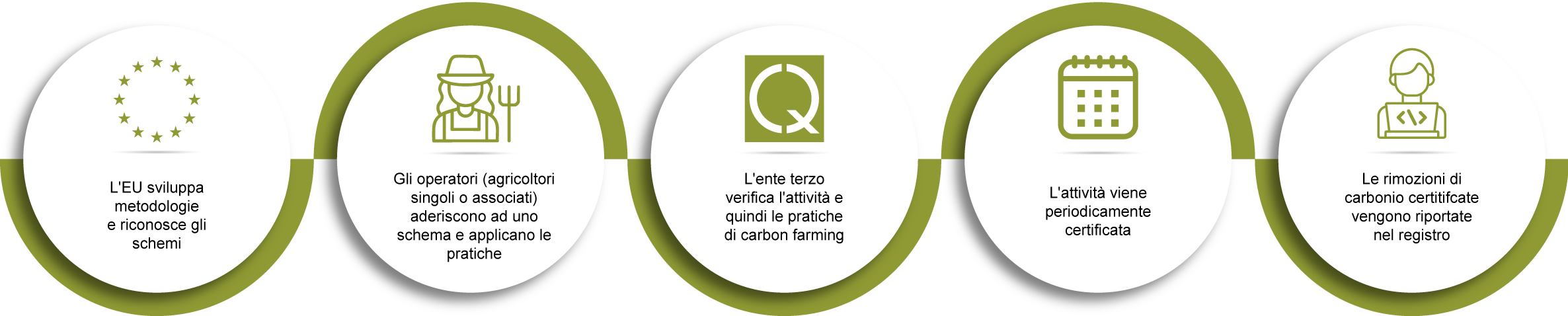
CSQA offers the certification service of net carbon removals in soil and crops , in accordance with EU Regulation 2024/3012 approved on 10 April 2024 and published in the Official Journal on 6 December 2024.Agricultural companies and supply chains that adopt good sustainable agriculture practices can generate carbon credits that can be sold on the voluntary market.
In this way, it is also possible to financially enhance one's concrete commitment to the path towards sustainability.
This Regulation currently identifies several types of activities that promote carbon storage (temporary or permanent in products) or the reduction of carbon emissions, including Carbon Farming , which includes various agricultural practices such as, for example:
- Grassing.
- Reduction of nitrogen fertilizers.
- New orchards.
- Sustainable forest management.
- Re/Afforestation.
- Organic farming.
- Sustainable soil management (minimum tillage, soil cover).
The objectives it sets itself:
- Incentivize high-quality carbon removals .
- Provide tailored certification methodologies for different practices.
- Fighting greenwashing and building trust.
- Harmonizing credit market conditions.
Key points
The criteria with which carbon removal activities and projects must be evaluated are the so-called QU.ALITY criteria:
- QUantification: Removal activities are precisely measured and provide clear climate benefits.
- Additionality: Carbon removal activities go beyond common practices and what is legally required.
- Long-term: The duration of carbon storage must be considered and assessed as permanent or temporary.
- Sustainability: Carbon removal activities must not harm the environment and must contribute to other environmental objectives such as biodiversity.
Advantages
- Possible income supplement for the farmer.
- Demonstrate the role of farmers as custodians of biodiversity and agroecosystem sustainability .
- Operators in various sectors are now able to purchase carbon credits generated nationwide with positive local impacts.