The document collects analyses, data, and recommendations developed within the Food & Beverage Community and serves as a strategic roadmap for businesses and policymakers, with the aim of strengthening the sector's competitiveness, resilience, and growth capacity.
A strategic sector for the country system
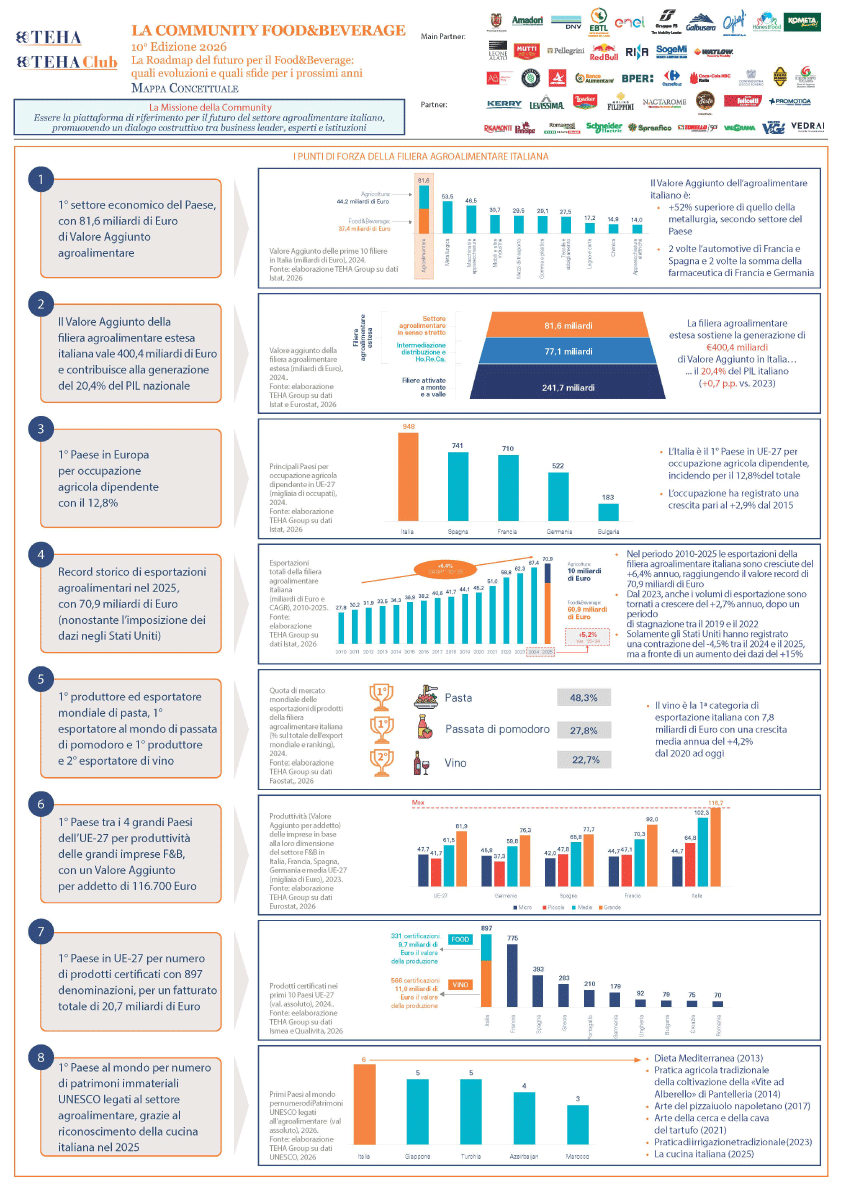
The report starts from the central role of agri-food in the Italian economy , confirming it as one of the country's main industrial assets in terms of added value, employment and international projection.The supply chain stands out for some key characteristics – quality, connection to the territory and certified production – which represent the foundation of the competitiveness of Made in Italy on global markets .
A context undergoing strong transformation
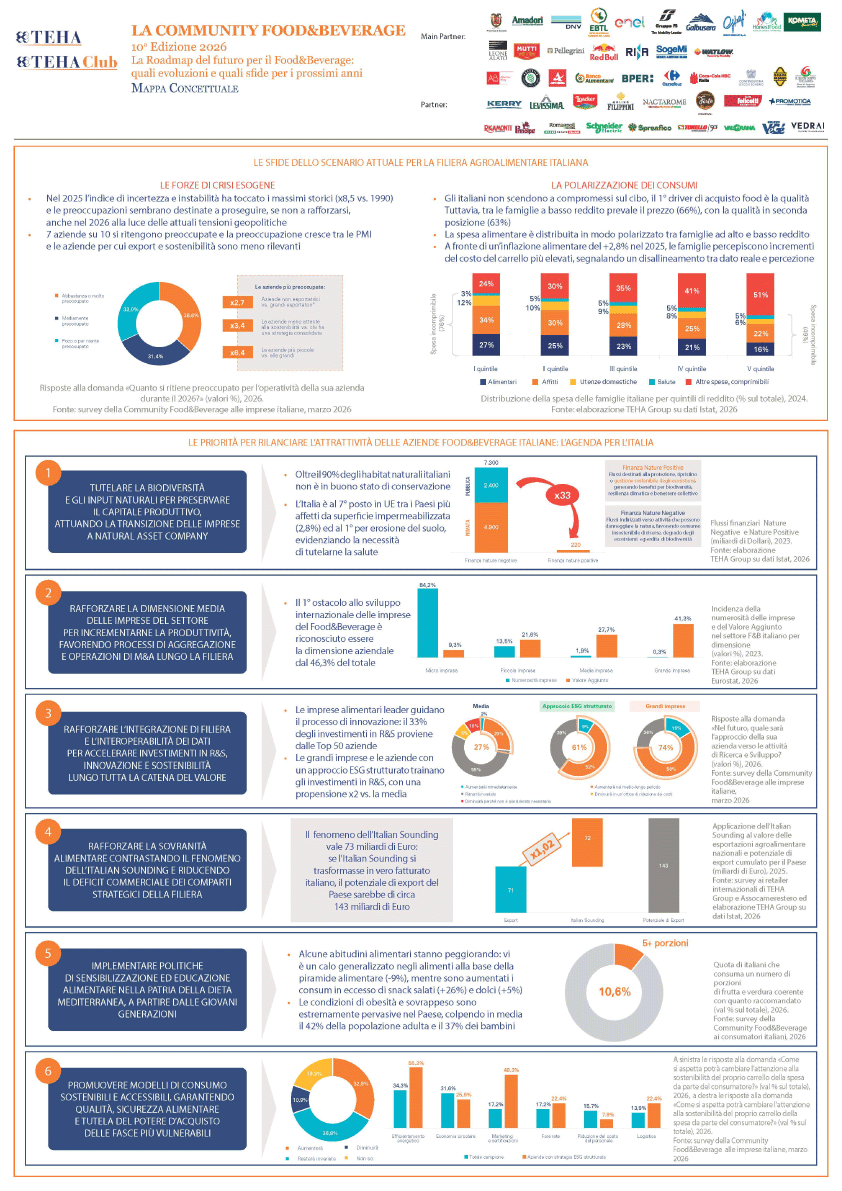
One of the central messages of the report concerns the sector's entry into a phase of structural uncertainty , driven by several factors:- increasing energy and raw material costs
- geopolitical tensions and supply chain fragility
- increasingly significant effects of climate change
- evolution of the European regulatory framework
Consumption and behavior: new dynamics
The document also highlights a profound transformation on the demand side.Rising inflation and declining purchasing power are leading to:
- more selective and rational consumption
- polarization between premium and low-cost products
- change in consumer habits , especially when eating out
International competitiveness and Made in Italy
A key chapter of the report is dedicated to the positioning of Made in Italy products on global markets.While on the one hand Italy maintains a strong reputation linked to quality and territorial identity, on the other hand critical issues emerge:
- reduced average size of companies
- lower productivity than other European countries
- need to strengthen internationalization
Sustainability and innovation as key drivers
Among the strategic pillars indicated in the document, the following stand out:- sustainable and circular transition of the supply chain
- technological and digital innovation
- efficient management of resources (energy, water, raw materials)
From analysis to recommendations
In addition to a snapshot of the sector, the report proposes a series of concrete lines of action, including:- strengthening industrial and agricultural policies
- investments in innovation and energy autonomy
- support for the dimensional growth of companies
- protection and promotion of Made in Italy
A roadmap for the future of Italian food
The report is therefore configured as a strategic guidance tool that, starting from data and scenarios, defines a development vision for the entire supply chain.In an increasingly complex global context, the Italian agri-food sector is called upon to evolve along three main lines:
- greater international competitiveness
- integrated sustainability
- capacity for innovation