
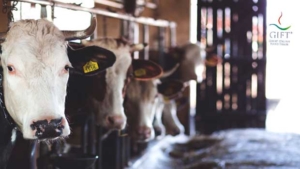
Organic farming is currently the only animal welfare certification system based on binding standards across the European Union. Alongside this, there are two national quality systems, SQNBA and SQNZ, and a growing number of private certification schemes, both European and international, with widely varying requirements and assurance levels.
For those involved in the livestock supply chain from stable to table , it's important to understand what each scheme actually certifies, who controls it, and what value it adds to the target market. This article provides a map, from organic to national and private systems, up to the rules on consumer information.
[…]
Alongside public systems, several private schemes operate. For an Italian company, the useful question is which of these are accessible and what the associated advantages are.
Schemes from Italian certification bodies. CSQA, DNV, Bureau Veritas, and other accredited bodies offer their own standards, such as CSQA's DTP 130 on pig welfare, which requires a welfare management system for farms, transport, and slaughter (biosecurity, responsible use of pharmaceuticals, training, ISO 22005 traceability) and supports welfare communications on labels. Advantages: immediate availability, audits in Italian, integration with other company certifications (e.g., SQNBA, antibiotic-free, IFS, BRC). Limitations: non-public standards and brands little known to consumers.
ISO/TS 34700:2016. This ISO technical specification, confirmed in 2025, defines the requirements for an animal welfare management system aligned with the World Organisation for Animal Health (WOAH) Terrestrial Animal Health Code for farms, transporters, and slaughterhouses of beef cattle, dairy cattle, and broiler chickens. In Italy, it is certified by organizations such as Bureau Veritas and DNV, with a three-yearly certificate and annual audits. It is not a consumer-oriented certification mark, but it is useful to companies exporting or supplying large-scale retail trade as internationally recognized proof of system compliance and as a basis for second-party audits.
[…]
Source: greatitalianfoodtrade.it