
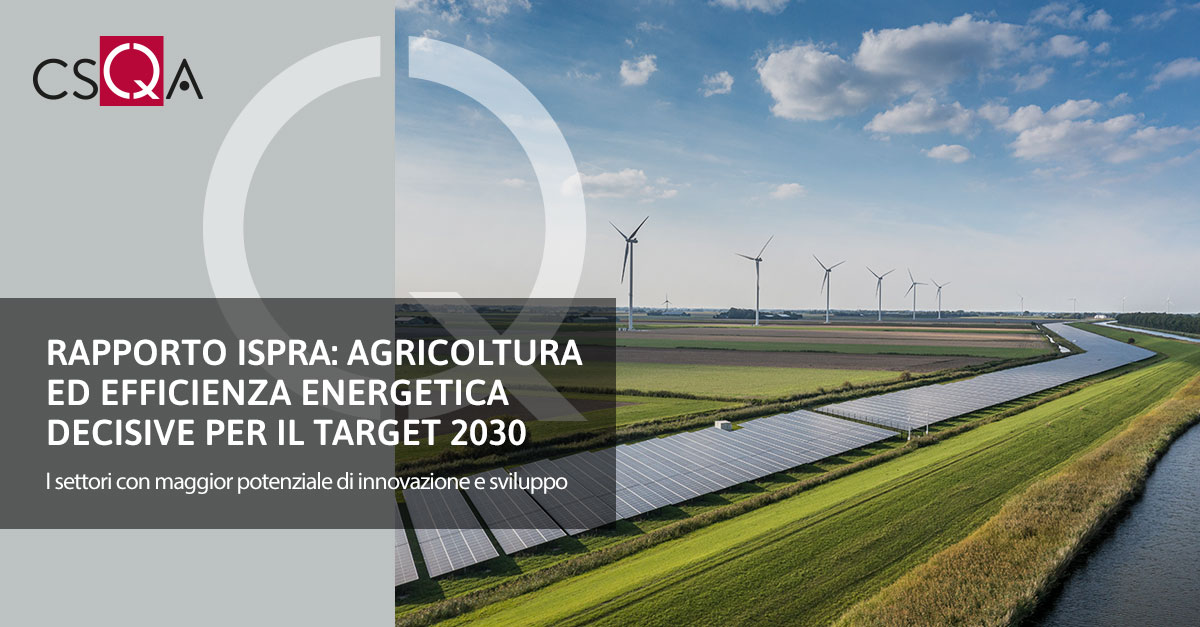
 Agriculture and energy efficiency emerge as two of the key areas for accelerating the reduction of greenhouse gas emissions in Italy .
According to the new ISPRA report “Greenhouse gas emissions in Italy: reduction targets and emission scenarios” , the country can reach the European target of -55% by 2030 , but the contribution of traditional non-energy sectors will be increasingly decisive.
After years of focusing primarily on industry and energy production, which were already well on the road to decarbonization, the report shifts its attention to sectors such as agriculture, land management, and building efficiency, which are considered essential to consolidating the results.
Agriculture: Innovation and sustainable practices to reduce emissions
ISPRA identifies the agricultural sector as one of the areas in which targeted policies and technological innovation can significantly contribute to the climate transition.In particular, the report highlights how:
- the introduction of sustainable agricultural practices
- more efficient fertilizer management
- the adoption of technologies for the reduction of methane and nitrous oxide emissions
A central role is also attributed to the ability of the agricultural system to integrate with broader climate policies , contributing not only to the reduction of emissions but also to the resilience of the territories.
The contribution of soil and forests
In the agricultural-territorial context, ISPRA also underlines the strategic value of the LULUCF sector (land use, land use change and forests).Projections indicate that this sector is among the few already aligned with European objectives and could contribute positively both in the 2021-2025 period and in 2026-2030, strengthening the role of natural capital as an "ally" in reducing emissions.
Energy efficiency: the building issue
Alongside agriculture, energy efficiency – particularly in the building sector – represents one of the most important levers but also one of the main critical issues.According to the report, energy consumption related to heating buildings remains one of the biggest obstacles to achieving the goals of the European Effort Sharing Regulation, which calls for a 43.7% reduction in non-industrial sectors in Italy by 2030.
The pace of energy requalification of the building stock is still considered insufficient, making it necessary:
- accelerate efficiency measures
- promote low-emission technologies
- better integrate incentive policies
Integrated policies and investments to bridge the gap
The ISPRA report emphasizes that the success of the Italian climate strategy will depend on the ability to integrate different interventions, combining:- technological innovation
- public and private investments
- coordinated policies between sectors
A transition that passes through the "diffuse" sectors
The picture outlined by ISPRA highlights a paradigm shift: while energy and industry are already moving toward decarbonization, the decisive challenge will be in the more widespread sectors—such as agriculture and construction.Large-scale interventions in these areas will in fact be able to:
- structurally reduce emissions
- improve fuel efficiency
- strengthen the overall sustainability of the economic system