
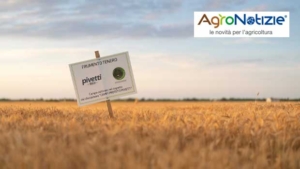
Producing 1 kilogram of bread releases (on average) about 0.70 kilograms of carbon dioxide into the atmosphere, a gas known to be a major contributor to the greenhouse effect and global warming. Of this figure, the field production phase accounts for about 0.5 kilograms. Behind this figure, in fact, lies the consumption of diesel fuel to till the soil and harvest the grain, the use of pesticides, and, of course, fertilizers.
[…]
The use of Yara Climate Choice is part of the Campi Protetti Pivetti supply chain, a CSQA-certified production system that guarantees the traceability of 100% Italian soft wheat and a commitment to sustainable agricultural practices. "For years, we have been working to make our flour increasingly environmentally, economically, and socially responsible," said Alessandro Zucchi , agronomist and supply chain manager at Molini Pivetti.
The Life Cycle Assessment (LCA) analysis , conducted on the entire flour production cycle, highlighted how the agricultural phase accounts for up to 60% of total emissions. For this reason, adopting greener fertilizers represents a key step in reducing the supply chain's environmental impact while simultaneously offering the market a premium product .
“The advantage is twofold : on the one hand, it responds to the demand of companies and consumers seeking more sustainable products ; on the other, it creates added value that can be monetized , for example in the form of a supply chain bonus or access to new commercial outlets,” added Zucchi.
The CSQA certification , already applied to the Campi Protetti supply chain, will ensure that new agronomic practices are recognized and properly communicated on the market. A portion of the flour produced in this way will be offered to food companies committed to reducing their emissions.
[…]
Source: AgroNotizie.it